
Let’s be honest: “keyword research” sounds too technical and a little boring, right? It brings to mind giant spreadsheets and confusing graphs. But what if I told you that mastering this one skill is the closest thing to a superpower in digital marketing?
Proper keyword research isn’t about gaming the system. It’s about developing a deep, almost psychic understanding of your audience’s problems, and it’s a crucial part of any successful content strategy framework. It’s the difference between shouting into a void and having a quiet, productive conversation with someone who is ready to listen.
Forget what you think you know about stuffing keywords into a blog post. That’s a fast track to getting ignored by both people and Google.

In this guide, I’m going to break down how to do keyword research the right way. We’ll skip the jargon and focus on the practical steps to uncover the exact phrases your ideal customers are using when they’re ready to buy. Let’s engineer a smarter approach.
Chapter 1: The “Why” Behind the What—Deconstructing Search Intent
The single biggest mistake beginners make is focusing on what people are searching for, instead of why they are searching.
This “why” is called search intent, and it’s the ultimate goal a person has when they type something into Google. Modern search engines are now incredibly good at figuring out this intent and will only rank content that satisfies it.
If you don’t match the user’s intent, you simply won’t rank. It’s that critical.
The Four Flavors of Search Intent
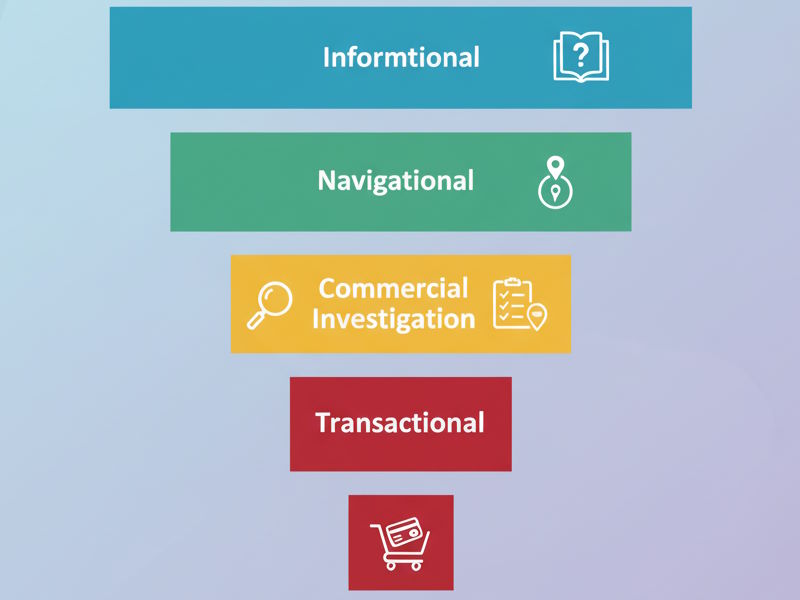
To do this right, we need to think like our audience and understand the four primary types of intent.
1. Informational Intent: “I need to learn something.” This is the top of the marketing funnel (TOFU). The user has a question and is in a research phase. These queries often start with “how to,” “what is,” or “why.”
- Example: “how to improve sales” or “what is a CRM”
2. Navigational Intent: “I need to go somewhere specific.” The user already knows the brand or website they want to visit and is just using the search engine as a shortcut.
- Example: “HubSpot login” or “ContentingLife blog”
3. Commercial Investigation Intent: “I need to compare my options.” This is where things get interesting. This user has moved past general learning and is now actively researching specific solutions with the intent to buy in the near future. They are evaluating their options. These keywords are pure gold for content marketers.
- Example: “best CRM for small business” or “Salesforce vs HubSpot”
4. Transactional Intent: “I need to buy something now.” This is the bottom of the funnel (BOFU). The user has their credit card in hand and is ready to take action. These are often called “buyer keywords” because they show the strongest intent to purchase.
- Example: “buy HubSpot starter plan” or “CRM software discount”
Our goal as smart marketers is to create content that serves users at each stage, but for driving immediate results, we’re laser-focused on those Commercial Investigation and Transactional keywords.
The Ultimate Test: Just Google It
How do you know what Google thinks the intent of a keyword is? Simple. You search for it. The Search Engine Results Page (SERP) is the ultimate source of truth.
If the top results for your keyword are all “Best of” listicles and review articles, the intent is Commercial Investigation. Don’t try to rank a product page here; you’ll fail.
If the results are all e-commerce pages with “Add to Cart” buttons, the intent is Transactional. A blog post won’t work.
If the results are dominated by a map and local business listings (the “Local Pack”), the intent is Local, a high-value subset of transactional intent.
Always let the SERP be your guide. It tells you exactly what kind of content you need to create to even have a chance at ranking.
Chapter 2: The Anatomy of a High-Intent Keyword
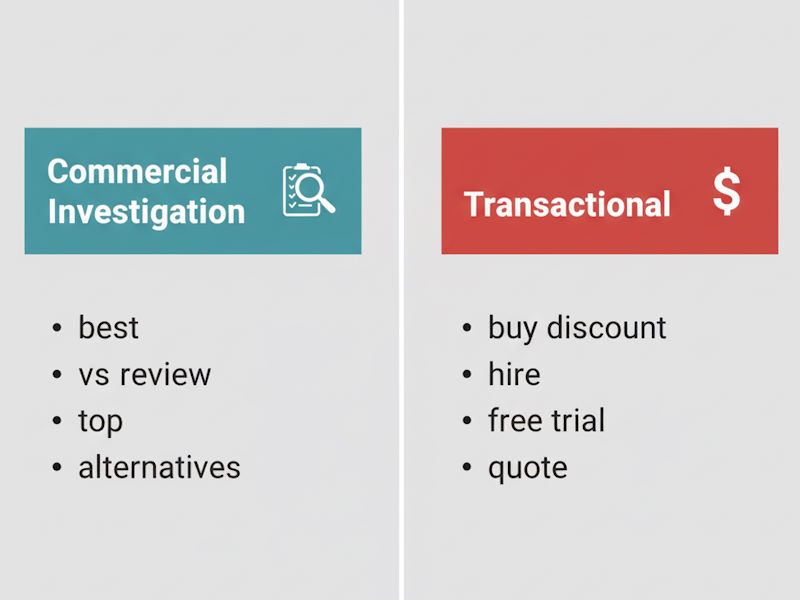
Once you understand intent, you can start to recognize the specific words and patterns—the linguistic signals—that users add to their searches when they get serious about buying. Mastering these modifiers is how you proactively find conversion-focused keywords.
Transactional Modifiers: The Language of “Buy Now”
These are the clearest signals that a user is at the bottom of the funnel. They often indicate an immediate need.
- Direct Purchase Terms: buy, order, purchase, for sale
- Deal-Seeking Terms: discount, coupon, sale, cheap
- Service/Lead Terms: hire, quote, schedule, free trial
When you see these words, you’re looking at a user who is ready to convert.
Commercial Investigation Modifiers: The Language of “Help Me Decide”
Before they’re ready to buy, users are in a critical evaluation phase. Capturing them here allows you to influence their final decision. These users are looking for your expert guidance.
- Qualitative Assessment: best, top, top-rated
- Comparative Analysis: compare, vs, versus
- Validation and Proof: review(s), testimonials
- Exploration of Options: alternatives, types of
These modifiers are direct requests for specific content types. A “vs” query needs a comparison page. A “best” query needs a curated listicle.
The Power of Specificity: Why Long-Tail Keywords Convert

Here’s a core principle: specificity correlates with intent.
As a search query gets longer and more detailed, it almost always signals that the user knows exactly what they want and is closer to converting. These longer phrases are called long-tail keywords.
- Head Term (Low Intent): “shoes”
- Mid-Tail (Medium Intent): “men’s running shoes”
- Long-Tail (High Intent): “buy men’s lightweight running shoes on sale”
Long-tail keywords are a beginner’s best friend. They have lower search volume individually, but they face far less competition and their conversion rates are significantly higher. The traffic they generate is highly qualified and ready to take action.
Chapter 3: The Strategist’s Toolkit—How to Find High-Intent Keywords
Now for the practical part. Let’s walk through the exact steps to find these valuable keywords using a mix of professional tools, Google’s free resources, and a little bit of detective work.
Method 1: Using Professional SEO Tools (The Fast Track)
Industry-standard platforms like Semrush and Ahrefs are built for this. They allow you to filter massive keyword lists down to just the high-intent gems.
A Simple Workflow in Semrush’s Keyword Magic Tool:
- Enter a “Seed” Keyword: Start with a broad term related to your business, like “CRM software.”
- Apply Intent Filters: Immediately select the “Commercial” and “Transactional” filters. This is the magic button that removes 90% of the noise.
- Use Modifier Filters: Add a filter for keywords that include “best,” “vs,” “alternative,” or “review” to find your commercial investigation topics.
- Sort by CPC: A high Cost-Per-Click (CPC) is a direct signal of commercial value. Sorting by CPC often reveals the keywords that advertisers have already proven to be profitable.
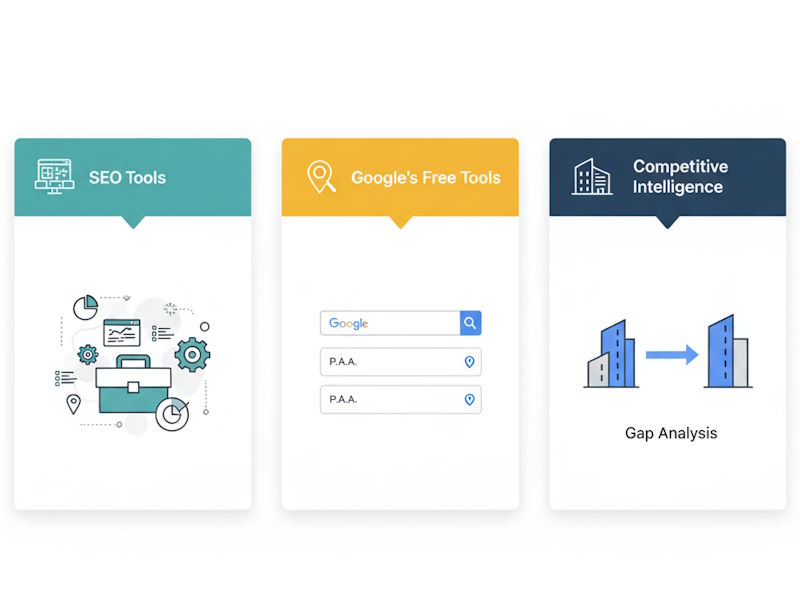
Method 2: Leveraging Google’s Free Tools (The Budget-Friendly Approach)
You don’t need expensive tools to get started. Google gives you incredible data for free if you know where to look.
Using Google Keyword Planner for Commercial Intent:
- Go to Google Keyword Planner (you’ll need a Google account).
- Use the “Discover new keywords” feature and enter a seed term.
- Pay close attention to the “Top of page bid (high range)” column. This shows what advertisers are willing to pay for a top ad spot. A high bid (e.g., >$10) is a powerful market signal that a keyword converts well. This is how you de-risk your content plan by targeting keywords already proven to be profitable.
Mining the SERP Itself: The Google search results page is a research tool in itself.
- Google Autocomplete: Start typing a query like “best crm for…” and see what Google suggests. These are popular, real-world searches.
- “People Also Ask” (PAA) Boxes: These expandable boxes show you the exact follow-up questions users have. They are perfect targets for H2 headings or FAQ sections in your content.
- “Related Searches”: At the bottom of the page, this section gives you a list of more refined queries that can spark ideas for supplementary cluster content.
Method 3: Competitive Intelligence (Reverse-Engineering Success)
Your successful competitors have already spent time and money figuring out which keywords convert. You can learn from their work.
Paid Search Espionage: The keywords a competitor consistently pays for in Google Ads are almost certainly their most profitable ones. Tools like Semrush’s “Advertising Research” tab or SpyFu allow you to see the exact keywords your competitors are bidding on. Focus on the terms they’ve been bidding on for months or years; these are their proven winners.
Organic Keyword Gap Analysis: This process compares your site’s keyword rankings to a competitor’s to find valuable keywords they rank for that you don’t.
- In a tool like Semrush’s Keyword Gap, enter your domain and up to three competitors.
- Focus on the “Missing” and “Weak” tabs. These show keywords where they are strong and you are not.
- Apply intent filters for “Commercial” and “Transactional” to find high-value gaps in your content strategy.
Chapter 4: Putting It All Together—From List to Action Plan
Once you have a list of potential keywords, the final step is to prioritize them and map them to specific pieces of content. This is how you turn research into a real content plan.
Evaluating Keywords with the PIE Framework
To avoid getting overwhelmed, score each keyword on a scale of 1-10 across three dimensions:
- Potential: How big is the opportunity? (Informed by traffic potential and CPC value).
- Importance: How relevant is this to our core business? (A direct reflection of business value).
- Ease: How difficult will it be to rank for this? (Inversely related to Keyword Difficulty).
Sum the scores to get a final priority number. This simple framework helps you quickly identify the “low-hanging fruit”—keywords with high potential and importance that are also easy to rank for.
The Final Step: Keyword Mapping
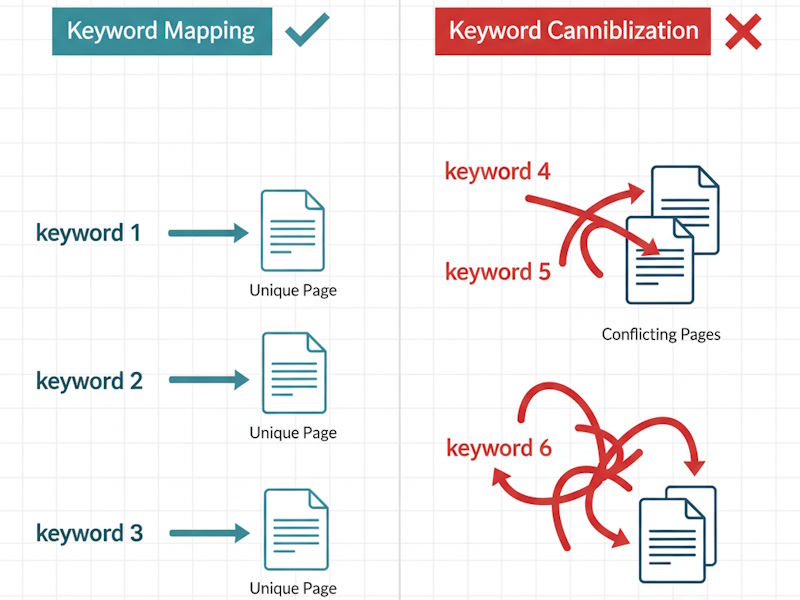
Keyword mapping is the process of assigning a primary keyword to a unique URL on your website. This is the most critical step for preventing “keyword cannibalization,” which happens when multiple pages on your site compete for the same term, confusing Google and hurting your rankings.
Create a simple spreadsheet with columns for:
- URL
- Primary Keyword
- Search Intent
- Funnel Stage
- Content Type
This map becomes your strategic blueprint. It ensures every piece of content has a clear purpose and a unique job to do, transforming your keyword research into a powerful, results-driven content engine.
 ContentingLife